 SURVIVAL APPS
Commodore 77: The Past Comes Back Dressed as Night City
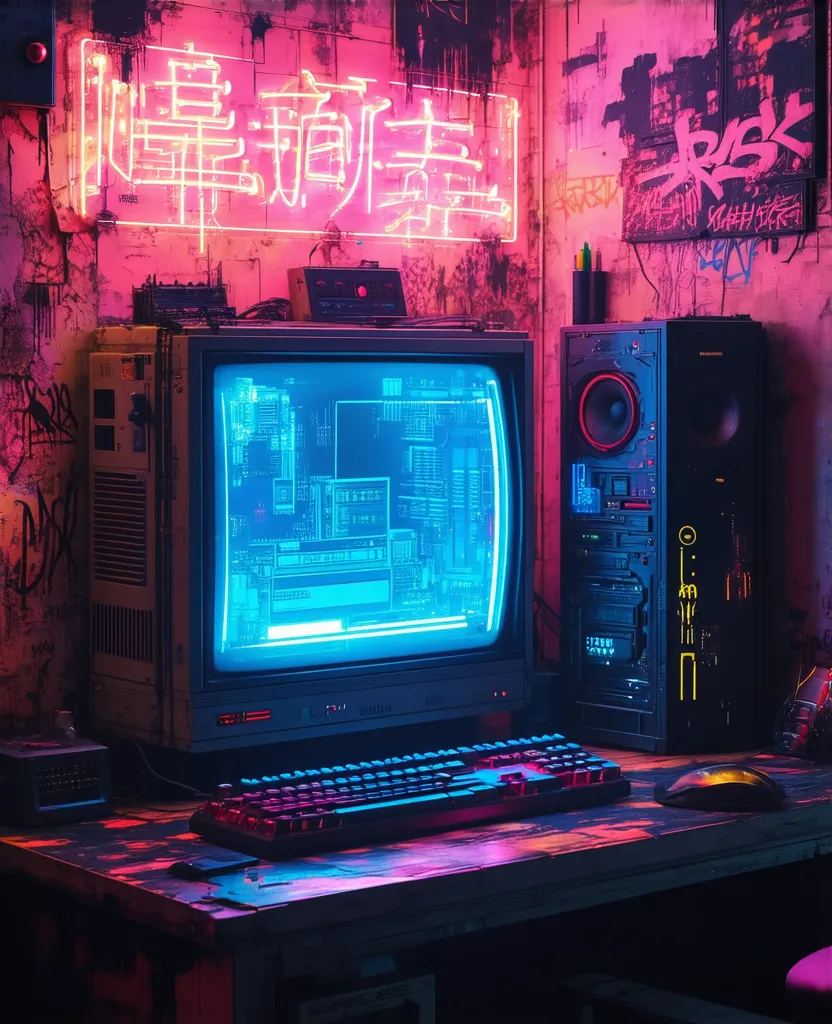
Some ruins you don't dig up. They come back on their own, dressed differently, and ask if you still recognize them. This time I recognized them at first glance: the same case where I learned to type my first lines of code, now covered in graffiti and neon, as if it had always belonged to Night City.
What it is, exactly
Its official name is Commodore 77: the first special edition of the Commodore 64 Ultimate — the modern FPGA reimplementation of the C64, not a software emulator, 99.9% compatible with the historic catalog of over 10,000 titles and peripherals — made by Commodore together with CD Projekt RED for Cyberpunk 2077. It is the first licensed hardware collaboration in the company's 68-year history. The announcement came at Gamescom 2026, with preorders already open on commodore.net.
- CORE — real FPGA: the original electrical behavior recreated at circuit level, not simulated by an interpreter. Compared to the standard C64 Ultimate, this edition uses the AMD Xilinx Artix-7 XC7A100T chip instead of the XC7A50T, nearly double the available logic cells
- AESTHETICS — a deliberately worn case, graffiti, half-peeled stickers, a metal plate across the function key row, even the boot screen redesigned with a dystopian twist
- EXCLUSIVE DEMO — written by Arise, a veteran Polish demoscene group, with a soundtrack by musician LukHash (who in 2021 composed and recorded the entire album CyberChip on real C64 hardware). It runs on 24 stereo SID channels and a 2 MB cartridge chip — capabilities beyond those of a stock C64 — and the LEDs at the base of the machine light up in time with the presentation
- CARTRIDGE — the demo ships on a cartridge designed like the data "shards" of Cyberpunk 2077, stamped with the Arasaka brand
- COMPATIBILITY — 99.9% of the original titles and peripherals, according to the information released at launch
Why it matters to me
It's not a superficial restyling, and that's why I'm writing about it here instead of just sharing it on social media. The aesthetic of this blog — controlled decay, neon over rust, technology that keeps itself standing after everything else has fallen — is exactly the same principle applied to the machine that opened my path. I didn't pick that aesthetic by chance: I recognized it, again, in a product nobody asked me to promote.
Who knows how many other ruins are just waiting for the right case to come back. What about you, what did you start programming on?