 SURVIVAL APPS
What the Digital Markets Act Means for Solo App Developers
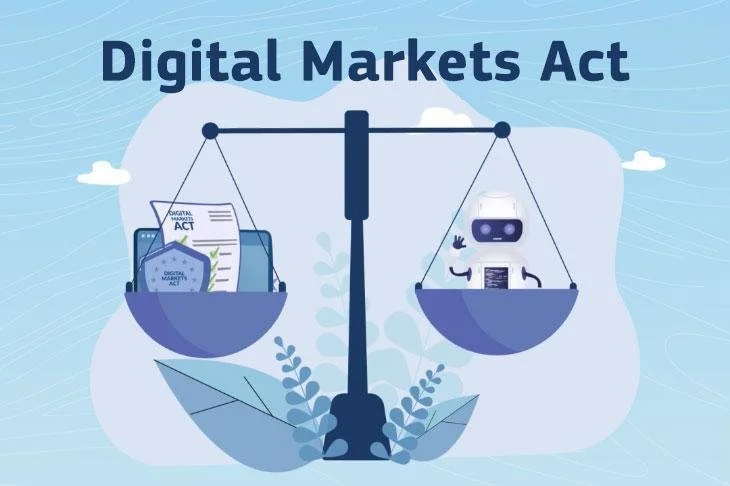
The city gates didn't open on their own. An edict came down from a distant council in Brussels, ordering the guards to let through even those who don't pay the main toll. The guards complied — but they also wrote a new rulebook, in small print, on how you get through the side doors. I went back to the gates to read it.
What the Digital Markets Act is, in brief
The Digital Markets Act (DMA) is the European regulation, in force since 2023 and fully applied since 2024, that imposes competition rules on the big digital platforms designated as gatekeepers[1] — among them Apple's App Store and Google Play. The stated goal: stop whoever controls the gate to billions of users from also dictating the only rules of the game inside it. For a developer, the part that matters isn't the antitrust theory, but the practical consequences for how you distribute and sell an app inside the European Union.
What actually changes if you publish an app
From a technical standpoint, the DMA's obligations have produced a few concrete openings, available only to users in the European Union:
- ALTERNATIVE STORES AND SIDELOADING ON iOS — Apple had to allow apps to be installed through marketplaces other than the App Store, or directly from the web. On Android, sideloading was already possible before the DMA: here the regulation changed the commercial terms more than the technology.
- YOUR OWN PAYMENT SYSTEMS — both Apple and Google must allow, as an alternative to their own billing system, the use of your own billing or a redirect to an external site for payment.
- THE (PARTIAL) END OF ANTI-STEERING — a developer can now tell users, inside the app, about offers, prices and purchase channels outside the store, something both platforms explicitly banned before the regulation.
- ALTERNATIVE BROWSER ENGINES ON iOS — apps that offer a browser can use engines other than WebKit, which Apple's policy previously made mandatory.
The price of a gate that opens
None of these openings is free, and this is where the regulation stops being a newspaper headline and becomes a spreadsheet to read carefully:
- APPLE, FROM 1 JANUARY 2026 — a single commercial model in the EU for all developers, with the EU Commission pairing the old commissions with a Core Technology Commission[2] that also applies to those who sell outside the App Store: opening the side gate doesn't mean walking through for free.
- GOOGLE, FROM 30 JUNE 2026 — reduced service fees, down to 10% on the first million dollars of annual revenue and on auto-renewing subscriptions, in the EEA/UK/US; a 5% billing fee remains if you use Google's alternative payment system, but disappears entirely if payment happens completely outside Google Play.
- REGISTRATION REQUIREMENT — to access alternative billing on Google Play in the EEA you need registered business developer status, not a hobbyist account: one more bureaucratic step, not a huge one, but a real one.
My take
It's tempting to read the DMA as the lone craftsperson's victory over the gate monopoly. In part it is: being able to link your own site for a commission-free payment, or distribute an iOS app outside the App Store, are possibilities that until recently didn't exist at all. But for those of us developing solo, the extra freedom almost always arrives disguised as another decision to make: which business model to pick on Apple, whether to enable alternative billing on Google, whether it's worth running two payment systems and the related VAT bookkeeping for an app that might bring in a few hundred euros a month.
The side gate is open, but it has its own form to fill out. For a legal team it's one more line in the spreadsheet; for someone publishing alone in the evening after dinner, it's time taken away from writing code. That's no reason to ignore it — it's a reason to evaluate it before publishing, not after, exactly like the fourteen days of closed testing I wrote about in this zone.
> app-store-ios: sideloading + alternative stores available
> google-play: alternative billing, requires business status
> fees: reduced BUT new items (CTC / billing fee)
> geographic validity: EEA/EU USERS ONLY
> moral: MORE CHOICES = MORE DECISIONS TO WEIGH
Frequently asked questions
Does the Digital Markets Act apply to apps by a single developer?
Yes: the regulation imposes obligations on the gatekeepers (Apple, Google and other large platforms), and it has no minimum threshold for the developer who publishes. The new possibilities — alternative stores, your own billing, telling users about external offers — are available to anyone publishing an app for users in the EU, regardless of team size.
Is it worth enabling alternative billing on Google Play or Apple?
It depends on your sales volume and your ability to handle invoicing and support yourself: below a certain revenue threshold, the savings on commissions are unlikely to make up for the time spent running a second payment system and the tax obligations that come with it.
Does the DMA apply outside the European Union?
No. It's a European regulation: the openings it imposes (sideloading, alternative stores, your own billing) only apply to users located in the EU/EEA. For the rest of the world, Apple's and Google's ordinary rules remain in force.
The regulation has opened a gap in the wall. I haven't yet decided whether going through it makes sense at my scale, but at least now I know where it is, and what it asks in return.
Notes
- Gatekeeper — in DMA terminology, a large digital platform designated by the European Commission based on thresholds of users, turnover and market position, subject to specific openness and non-discrimination obligations. ↑ back to text
- Core Technology Commission (CTC) — the commission Apple charges, under the new single model in force since 1 January 2026, on transactions for digital goods and services generated by an app in the EU, regardless of the payment channel used. The details (thresholds, percentages) are updated periodically by Apple: always check the official developer documentation before planning. ↑ back to text