 SURVIVAL APPS
Compulsive Scrolling: Inside the Infinite Feed
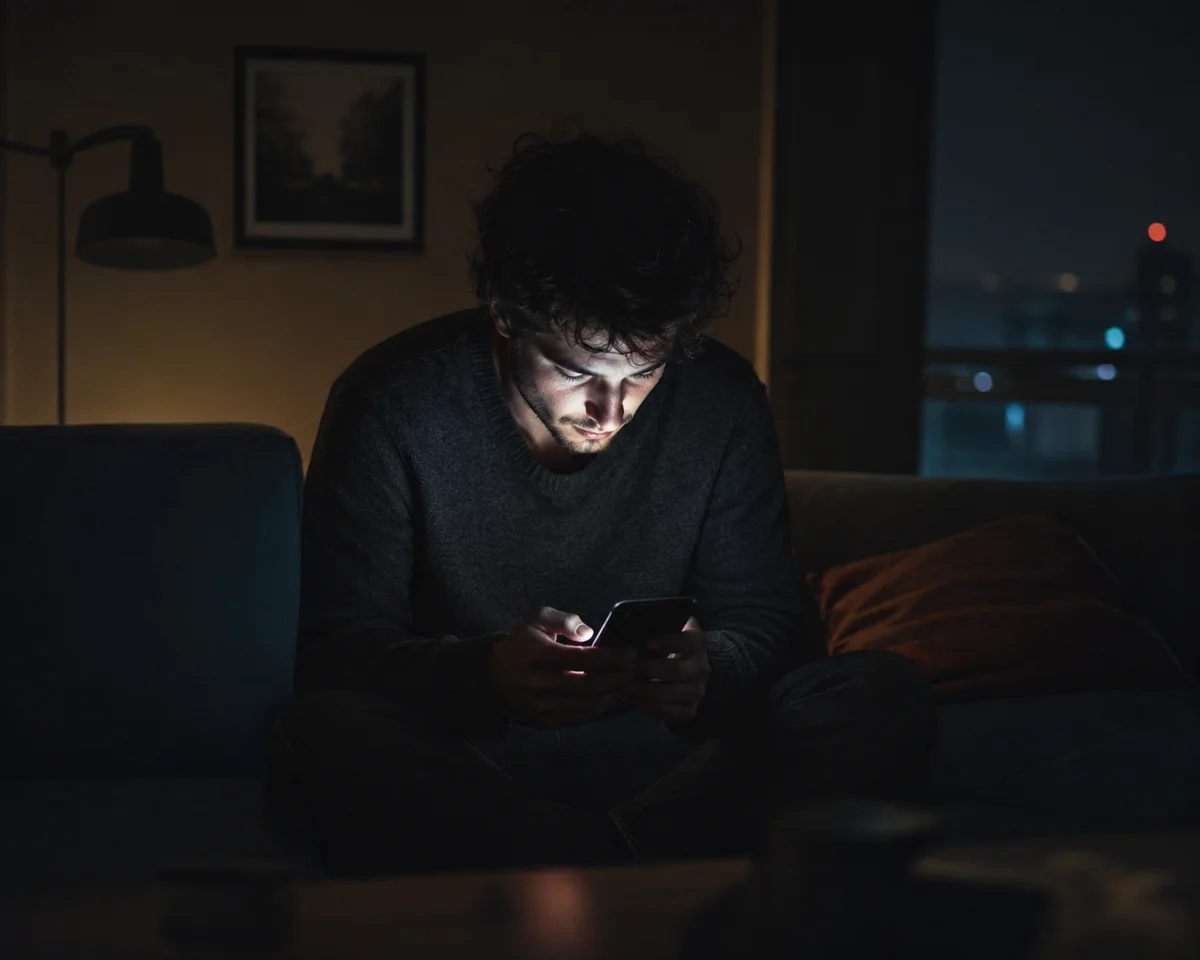
I found another survivor staring at the glowing rectangle. His thumb kept moving on its own, upward, forever, like a secular rosary. He wasn't looking for anything: the nothing was exactly the point. I sat down next to him and asked the question that out here in the ruins is worth more than water: who built this bottomless well, and why didn't they leave a bucket?
What compulsive scrolling is (and what doomscrolling is)
Compulsive scrolling is swiping through a feed endlessly, with no destination, often without even noticing. Doomscrolling is its darker variant: the same hunger for scrolling, aimed at negative and alarming news. In both cases it isn't about «spending too much time on your phone», but about dysfunctional use[1]: you leave the feed more agitated than when you went in, and no better informed.
Why the infinite feed hooks us
The uncomfortable thing, for someone who builds apps, is that this behavior is not a user defect. It's a feature of the product. A few specific design choices make it almost inevitable:
- INFINITE SCROLL — no «bottom of the page» means no natural stopping point. The old «page 2» button was a bucket; they took it away.
- PULL-TO-REFRESH — the drag-to-update gesture is, mechanically, a slot machine lever: rewards at variable intervals.
- AUTOPLAY — the next piece of content starts by itself, before you've decided you want it.
- SOCIAL REWARDS — likes, notifications and comments arrive unpredictably: it's the intermittent reward[2] that keeps you scrolling.
Underneath it all is dopamine, but not in the newspaper-headline sense: it isn't «pleasure», it's anticipation. The brain scrolls for the next possible hit, not for the one it just had. Add the human need to know «what's going on» — the illusion of control — and the well digs itself.
When scrolling becomes a problem
It's not a matter of minutes, but of control. A few honest signs from the field:
- BLIND TIME — you look up and forty minutes have gone by that you can't remember.
- FIRST AND LAST GESTURE — you scroll the moment you wake up and as the last thing before sleep.
- SEPARATION ANXIETY — without your phone within reach you feel restless.
- EMOTIONAL USE — you open the feed to avoid feeling boredom, sadness or stress.
Effects on anxiety, sleep and attention
Doomscrolling feeds anxiety: the constant stream of alarms keeps the nervous system on alert with never any closure. Before bed, the mental activation (plus the screen light) worsens your sleep quality. And the constant interruption fragments your attention: you train the brain to switch stimulus every few seconds.
How to get out (without throwing your smartphone away)
Detoxing from scrolling doesn't mean giving up digital life, it means putting a bucket back in the well. The moves that work act on your environment, not on willpower alone:
- REMOVE THE LEVERS — turn off autoplay, silence non-human notifications, switch the screen to grayscale: a less colorful feed pulls less.
- PUT IN A BOTTOM — per-app timers (Digital Wellbeing / Screen Time) or blocker apps: artificially reintroduce the «end of page» they took away.
- MICRO-PAUSE — before opening the feed, a one-second check-in: how do I feel right now, and what am I really looking for?
- REPLACE THE GESTURE — your hand wants something to do: a book on the nightstand, not the phone, breaks the automatism.
- ENVIRONMENT RULES — phone out of the bedroom; the first and last gesture of the day are not the scroll.
> autoplay: OFF
> notifications: humans only
> screen: grayscale
> curfew: 22:30 — phone out of the room
> status: BUCKET BACK IN THE WELL
Frequently asked questions
What is addiction to scrolling called?
It isn't (yet) an official diagnosis in its own right: people speak of problematic smartphone use or problematic social media use. The specific behavior has common-usage names — compulsive scrolling, doomscrolling, dopamine scrolling.
Why can't I stop scrolling?
Because the app is designed for exactly that: infinite scroll, autoplay and unpredictable social rewards exploit the anticipation mechanism. It's not a lack of willpower, it's design playing on its home turf.
How much scrolling time is «too much»?
The how matters more than the how much: the problem starts when scrolling costs you sleep, concentration or peace of mind, or when you can't do without it even when you want to.
Do apps that limit smartphone use work?
They help, if they make the friction visible (a bottom, a limit, a pause). They don't cure the cause, but they break the automatism enough to let you choose.
Is doomscrolling negative news different from ordinary compulsive scrolling?
It's the same hunger for scrolling aimed at alarming content — the same mechanism you see when reading about conflicts and global crises nonstop: you come out more agitated, not better informed.
I put the bucket back in the survivor's well and told him to look back every now and then. His thumb, for a moment, stopped. That's where you start building again.
Notes
- Doomscrolling — from doom and scrolling: the compulsive scrolling through negative news. ↑ back to text
- Intermittent reward — a reward that arrives unpredictably is more addictive than a constant one: it's the principle of the slot machine, and it's inside every pull-to-refresh. ↑ back to text