 SURVIVAL APPS
Ownership vs. Subscription
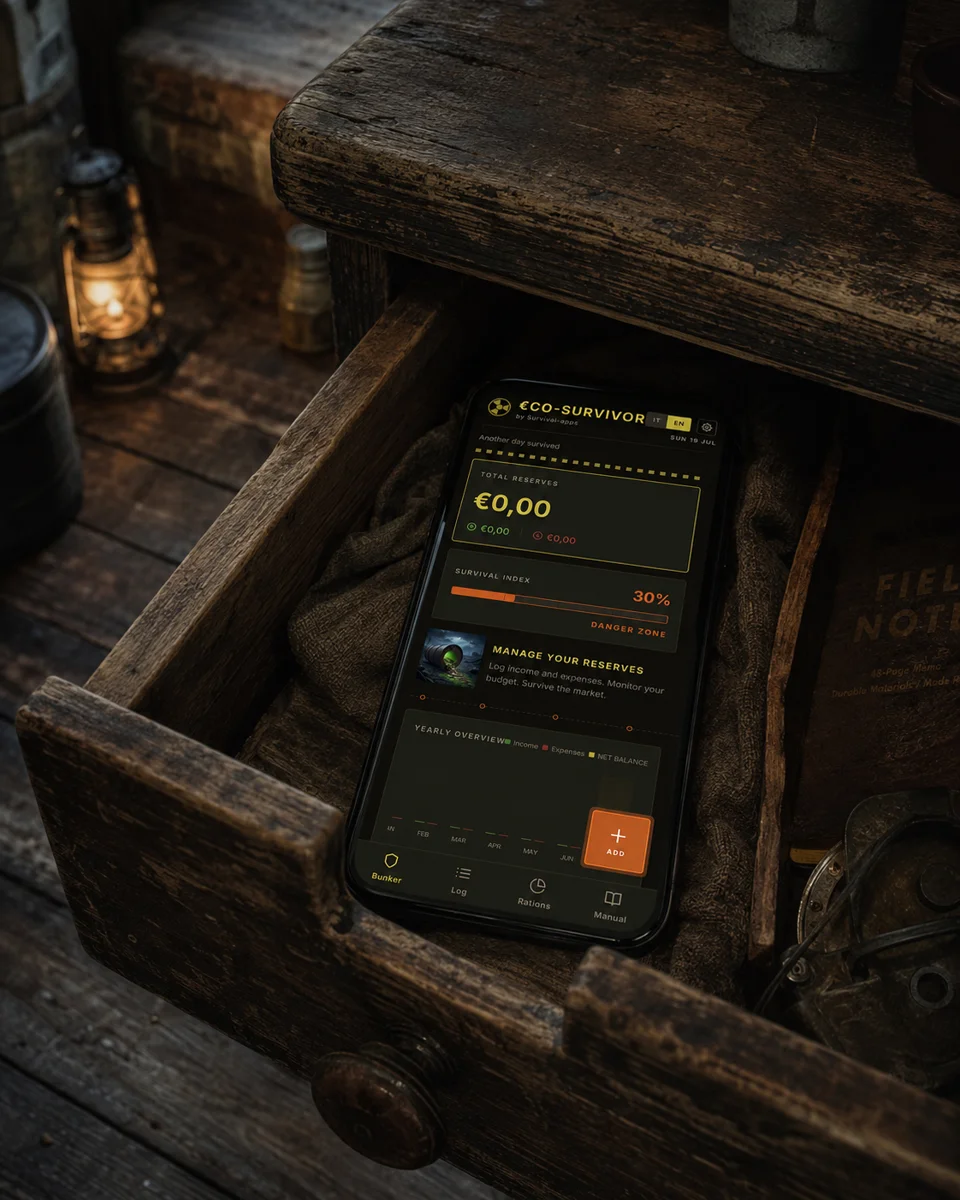
They call me a publisher, and the word sounds like an affectation until someone asks the right question: so do you sell or not? I sell. The difference isn't in the verb, it's in what's left to you after the transaction. This note is for anyone who asked themselves the same thing while reading the catalog.
The sentence that sounds like a contradiction
"Publisher, not seller" doesn't mean "I don't sell my apps" — I do, at 7.99€ each, on Payhip. It means the way I sell them follows an editorial logic, not an extractive one. A publisher has a catalog: the works they publish, once bought, belong to the reader. They don't stop working if the publisher shuts down, switches distributor, or stops publishing. That's the real point behind the phrase: not "I don't sell", but I don't rent in the literal sense — I don't charge you every month to keep using something you've already paid for once.
Two ways of selling the same file
The table below isn't abstract theory: it's the measurable difference between how Survival Apps products are built and how most software products are built today.
| Criterion | Publisher (Survival Apps) | Typical seller/platform |
|---|---|---|
| Payment | One-time, lifetime license | Recurring subscription |
| Product page | Static, informative: price, features, file hash | Storefront optimized for conversion |
| Checkout | Direct, no overlay profiling your session | Funnel with retargeting, upsells, exit-intent |
| Catalog | Coherent editorial line, a few curated apps | Optimized to maximize value per user over time |
| After purchase | The app stays yours, like a book on the shelf | Access depends on you continuing to pay |
The same problem, seen from another side
There's a not-so-obvious kinship between this discussion and the one about verifying an APK before installing it[1]: in both cases the underlying question is how much control do I have left, afterwards? A file you can verify against a public hash is a file that doesn't depend on my word. An app bought once and not rented is access that doesn't depend on my survival as a business. Technical trust and commercial trust are the same problem read at two different levels: how much of what you paid for is really still under your control, and how much stays in the hands of whoever sold it to you.
Frequently asked questions
Are Survival Apps apps subscription-based?
No: they're a one-time purchase at 7.99€ on Payhip, with a lifetime license. Once bought they stay yours, like a book on the shelf, and they keep working even if Survival Apps shut down or changed distributor.
What's the difference between a publisher and a subscription platform?
The payment (one-time versus recurring), the checkout (direct versus a funnel with retargeting and upsells) and above all what happens after the purchase: with a publisher the app stays yours, with a subscription your access depends on continuing to pay.
How does this relate to verifying an APK before installing it?
Both practices answer the same question: how much control is left to you afterwards? A file verifiable with a public hash doesn't depend on the word of whoever distributes it, just as an app bought once doesn't depend on the survival of whoever sold it.
A publisher has a catalog, not a funnel. May your code — and what you own — survive the apocalypse.
Notes
- Verifying an APK — the procedure with SHA-256 hash and VirusTotal report described in the previous transmission, now applied to every release of the apps sold on Survival Apps. ↑ back to text