 SURVIVAL APPS
Where artificial intelligence lives (and who pays the bill)
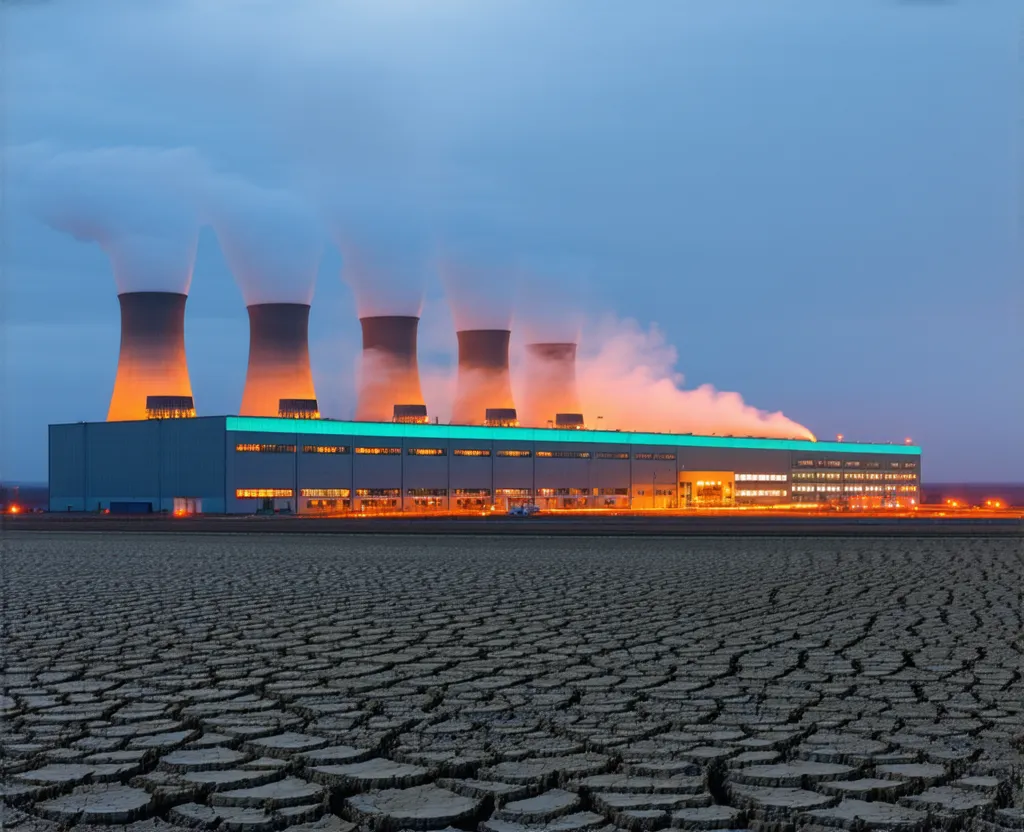
Every now and then I take an old hard drive apart and hold it a little longer than I need to. It's heavy. It's warm if someone's just used it. It reminds me of something the word "cloud" taught us to forget: somewhere under every answer that arrives in a second, there's an enormous shed that drinks, heats up and hums. And there's a town nearby.
The cloud is made of concrete
A data center is a building full of computers that never switch off, and computers, in the end, are heaters. All the electricity that goes in comes out as heat, and the heat has to be carried away. The ones built for artificial intelligence are the hungriest: graphics cards stacked by the thousand, running day and night, to train the models and then to answer millions of questions.
The numbers, for what estimates are worth. The International Energy Agency figures that global data-center electricity use could reach around 945 TWh a year by 2030, nearly double today, with the AI share growing faster than everything else.[1] In the US, a Lawrence Berkeley National Laboratory report puts the share of national demand between 6.7 and 12 percent by 2028.[2] These are forecasts, not measurements, and the ranges are wide. But they all point the same way.
Three things that end up far from the screen
The first is water. Many facilities cool by evaporating it, and that water doesn't come back. According to the same Berkeley lab, US data centers directly consumed about 66 billion liters in 2023, and a far bigger figure once you count the water used by the power plants that supply them. A single chatbot question costs very little, and anyone who tells you otherwise is exaggerating: the problem isn't the drop, it's where it falls. A liter drawn from a rainy region doesn't weigh the same as a liter taken from an aquifer already under strain, and several new sites are planned in exactly the dry places.
The second is air. When the grid can't keep up, some data centers make do with gas turbines on site. A study on Northern Virginia, commissioned by an environmental group (so read it with that in mind), estimates health damages of $53 to $99 million a year for a single campus, mostly from fine particulate matter.[3] It's a model, not a count of sick people. Still, particulates do harm, even below legal limits, and the people breathing are the ones who live there.
The third is the power bill. When an area fills up with sheds that draw electricity around the clock, the grid has to be upgraded, and the cost usually gets spread around. Not always, it depends on the contracts, but it happens often enough that it's worth asking about out loud.
- ELECTRICITY — what matters is where it comes from: a data center on a coal or gas grid weighs far more than one running on renewables
- WATER — where it sits and how it cools is what counts: closed loops and air cooling use much less than evaporation
- AIR — on-site gas turbines push the damage onto the neighbors, who chose nothing
- HEAT — almost always thrown away; in some places it already warms whole neighborhoods
What we can do about it
I don't have a recipe, and I distrust anyone selling one. But there are things to do, on three levels.
As users: use AI when it's needed, not by reflex. Regenerating the same answer ten times to see if it changes is a small waste that, multiplied by millions of people, becomes one more shed. A smaller model, or one that runs on your own computer, is plenty for a lot of jobs. It's the logic I've always followed in this workshop: less computing waste, and the site you're reading is static on purpose, with no JavaScript running around.
As citizens: new data centers need permits, and permits go through town councils and public consultations that almost nobody follows. Asking how much water they'll draw, from what source, where the power comes from and whether they'll use gas generators is a right, not a nuisance.
For those who decide where to build: this is the only level where the solutions are already known. Closed-loop cooling, sites in cold climates or where water is plentiful, heat recovery for district heating, renewable energy that's real and not just certified on paper. It costs more, which is exactly why it has to be demanded.
> location: a shed, not an idea
> projected use by 2030: ~945 TWh/year (IEA)
> neighbors consulted: almost never
Frequently asked questions
How much energy do AI data centers use?
According to the International Energy Agency, data centers worldwide could reach around 945 TWh a year by 2030, nearly double today, with AI as the main driver of growth. These are estimates and depend on how many machines actually get built.
Do data centers really use that much water?
It depends on how they cool and where they stand. Many use water that evaporates and doesn't return. In the US, according to a Lawrence Berkeley National Laboratory report, direct use in 2023 was about 66 billion liters. The real harm is local: it bites where water is already scarce.
What can I do to reduce AI's impact?
Use it more deliberately (no pointless regenerating), prefer small or local models when they're enough, and find out about data-center projects in your area, asking about water, energy and pollution in public consultations.
[1] International Energy Agency (IEA), Energy and AI report, 2025. ↩
[2] Lawrence Berkeley National Laboratory, United States Data Center Energy Usage Report, 2024. ↩
[3] EmPower Analytics Group for the Piedmont Environmental Council, study of the Vantage VA2 facility (Sterling, Virginia): a modeled estimate, not a health survey. ↩
When you take an answer in your hands, remember it came through a real place. May your code survive the apocalypse, and may nobody have to breathe badly so you can have a faster reply.