 SURVIVAL APPS
Why I Started Using Claude Code (and What It Means for an Indie Dev)
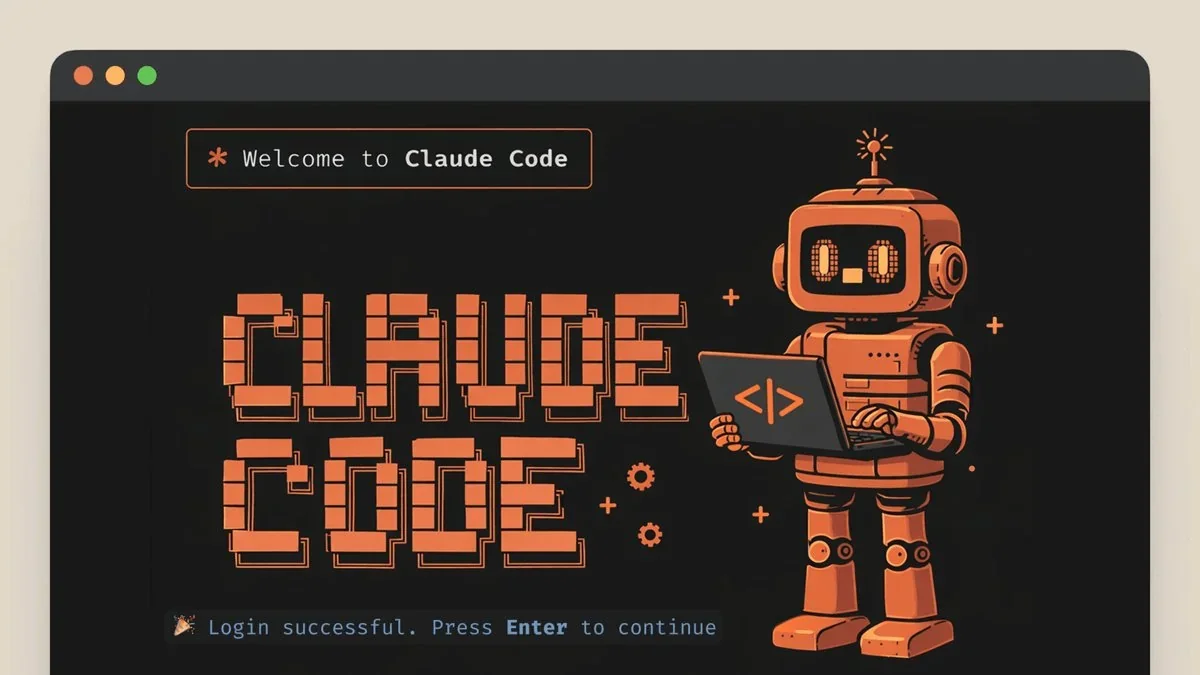
I owe whoever reads this a confession: of all the transmissions, this is the one the construct watched most closely while I wrote it. It didn't comment. It just left the cursor still for a second longer than usual, like someone waiting to see whether you'll tell the truth.
What it is, without the mythology
Claude Code is an AI agent that lives in the terminal[1]: it reads the project's files, proposes changes, runs commands and tests, and does it all by conversing in natural language. It's not a smarter autocomplete: it's closer to a collaborator you describe a task to, who comes back with finished work for you to review. The difference from generic chatbots is that it operates inside the project, with the real context, not on fragments pasted into a chat.
What changes for someone working alone
An indie developer has no colleagues. Nobody to think out loud with, nobody to read over the code, nobody to hand the boring part to while you focus on the hard one. It's in these three gaps — not in the writing of code itself — that an agent shifts the proportions of the craft:
- THE MECHANICAL WORK — boilerplate, repetitive migrations, routine tests: hours that used to be a fixed toll now shrink into minutes of review
- THE SECOND PAIR OF EYES — for the first time, a lone developer's code goes through systematic review before it goes live. Not infallible, but incomparably better than none
- THE REASONING PARTNER — discussing an architecture before writing it, with something that knows your code and pushes back on the substance, used to be a team privilege. Not anymore
What doesn't change (and it's the important part)
The responsibility stays entirely mine. I learn from every new line of code that gets shared and reviewed. The architecture stays mine, the taste stays mine, the decision about what to build stays mine. The agent amplifies the skill it finds: amplify zero and you still get zero.
The objection I raise against myself
And here's the knot for anyone who has made independence a philosophy: isn't leaning on a big company's cloud service a contradiction? Yes, partly it is, and denying it would be dishonest. My practical answer has two fixed points. First: the acceptable kind of dependence is the kind you can lose without sinking — the code I produce with the agent has to remain code I can maintain on my own, in the same essential stack as always; if the service vanished tomorrow, I'd lose speed, not projects. Second: skill has to be deliberately kept in training, the way you keep your sense of direction in training even when you have a GPS. It's the same principle as all of Zone 3, applied to software: use the tools of the present, but stay capable of surviving without them.
> code not understood → not published
> architecture and decisions → human
> survival test: IF THE SERVICE VANISHES, THE PROJECT LIVES
Frequently asked questions
What is Claude Code?
A command-line AI agent (from Anthropic) that operates inside the project: it reads files, proposes changes, and runs commands and tests by conversing in natural language, with the real context of the code instead of fragments pasted into a chat.
Does an AI agent take control away from an indie developer?
No: architecture, taste, and decisions about what to build stay with the developer. The agent amplifies the skill it finds — amplify zero and you still get zero. It's the same principle of independence described in the Survival Apps manifesto.
What happens if the AI agent's service disappears tomorrow?
The code it produced has to stay within the essential stack the developer can maintain alone: you'd lose speed, not your projects.
I reread the post one last time before transmitting it. The cursor, tonight, stayed still for exactly one second longer than usual.
May your code survive the apocalypse — whatever wrote it alongside you.
Notes
- Claude Code — a command-line tool from Anthropic built on the Claude models: an agent that operates on the project's filesystem with permissions controlled by the user. Equivalents from other vendors exist; the reflections in this post apply to the whole category. ↑ back to text