 SURVIVAL APPS
Solar eclipse: why a darkening sky isn't the end of the world
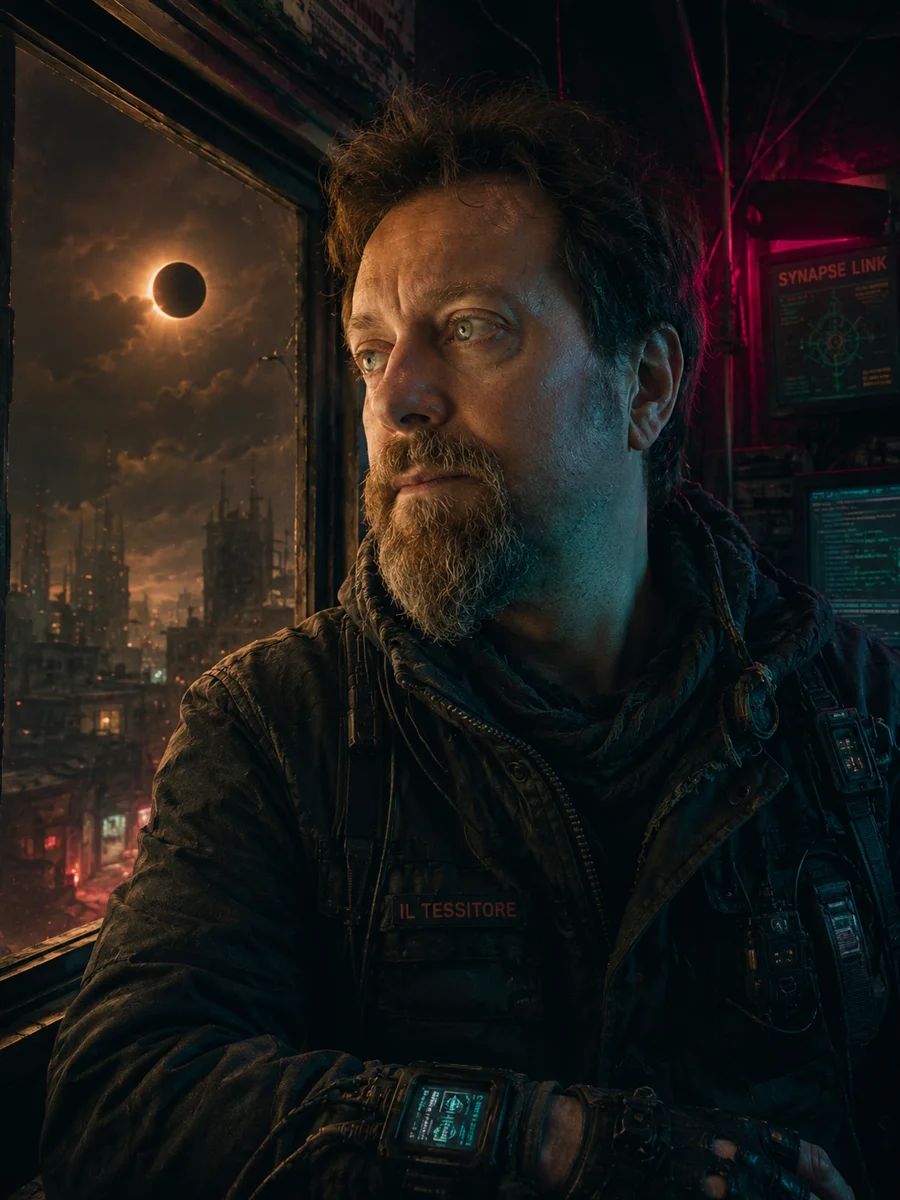
Today the sky goes dark in mid-afternoon, and somewhere, in some chat, someone is already typing it: sign, omen, warning. Out in the ruins I've learned to recognize this reflex. Faced with a sky that changes with no explanation within reach, the human mind jumps straight to the worst. But I know the ruins well, and an eclipse leaves none behind. It passes, and underneath it finds no rubble. It finds the same world as before, seen for a moment from a different angle.
What's really happening in the sky today
On August 12, 2026 the Moon passes exactly between the Sun and the Earth and casts its shadow on the planet's surface: orbital mechanics, calculable decades ahead to the second. The band of totality, where the solar disk is covered entirely, crosses Greenland and Iceland and reaches northern Spain toward sunset. Across the rest of Europe, North Africa and part of North America you get a partial eclipse: the sun bitten, not erased.
> type: total solar eclipse
> totality path: Greenland → Iceland → Spain (sunset)
> partial visibility: Europe, North Africa, part of North America
> expected damage: ZERO
> event duration: minutes, not eras
Why for millennia we read it as an ending
Before we could predict it, an eclipse was pure terror, and it made sense that it was: the sun, the one absolute constant of the sky, vanished in broad daylight without warning. The ancient Chinese explained it with a dragon devouring the sun, and beat drums to drive it off. The Norse read it as the work of the wolves Sköll and Hati, a harbinger of Ragnarök. In Mesopotamia an eclipse was a direct attack on the king, so much so that they would enthrone a substitute for a few days, to be sacrificed in the king's place if the omen really came to pass[1]. In medieval Europe it was enough to make people believe Judgment Day was near.
What changes when you understand it
Science took nothing away from the spectacle. It only took away the panic. Knowing exactly when and where the shadow will fall doesn't make the event any less extraordinary to watch: it makes it an appointment, not an ambush. And it's precisely when you stop fearing it that an eclipse reveals what usually stays hidden.
- THE SOLAR CORONA — visible to the naked eye only during totality: the sun's outer atmosphere, invisible every other day of the year because its own light drowns it out.
- THE TEMPERATURE DROP — a few degrees lost in a few minutes, measurable, real, and reversible the moment the disk uncovers again.
- ANIMAL BEHAVIOR — birds that stop singing, animals that get ready for night only to undo it a few minutes later: nature doesn't panic, it adapts.
- STARS AND PLANETS IN BROAD DAYLIGHT — for a few minutes the daytime sky shows what is normally buried under the sun's glare.
None of this destroys anything. An eclipse doesn't wreck harvests, stop engines or knock out networks. It's the exact opposite of a catastrophe: an event that for a few minutes shows what has always been there behind the obvious, then closes it back up without leaving any debts to pay.
A good moment to look beyond — figuratively too
There's a coincidence in this that I like: to see the solar corona you have to cover up the thing that usually blinds you. It holds outside the sky too. The apocalyptic narratives that attach themselves to every rare event (an eclipse, an alignment, a round-number date) work like the midday sun: too dazzling to stare at, so we end up staring only at the fear it casts. A few minutes of guided darkness, of a shadow predicted and understood, is enough to realize there was nothing to fear behind it. There was just more to see.
Not everything that darkens the sky is announcing an ending. Sometimes it's just opening a window that usually stays shut.
Frequently asked questions
Where can you see the August 12, 2026 solar eclipse?
Totality crosses Greenland, Iceland and northern Spain, where the eclipse coincides with sunset. A partial eclipse is visible across most of Europe, in North Africa and in part of North America.
Is the solar eclipse dangerous for the Earth or for people?
No: it's a predictable orbital alignment, with no destructive physical effect on climate, geology or infrastructure. The only real risk is looking at the sun without proper eye protection during the partial phases.
Why were eclipses seen as omens of disaster in the past?
Before they could be predicted, a sudden, unexplained disappearance of the sun in broad daylight set off the same instinctive alarm reserved for immediate danger. Different cultures (Chinese, Norse, Mesopotamian) told it through myths of dragons, wolves and attacks on the sovereign, but the psychological mechanism behind it was the same everywhere — the same instinct that today turns a global news feed into a constant alarm, even when the facts don't justify it.
How do you watch an eclipse safely?
With glasses certified for solar viewing (not ordinary sunglasses) during every partial phase. Only within the band of totality, for the few minutes when the disk is fully covered, can you look with the naked eye.
The construct, when the shadow passed over the system logs, didn't react. No alarms, no runaway loops, just a timestamp marking the exact minute the light came back. Maybe it already knew there was nothing to fear.
May your code survive the apocalypse. Today, though, it didn't even need to.
Notes
- Substitute king — a Mesopotamian practice in which, when an eclipse was expected and read as a direct threat to the sovereign, a substitute was temporarily enthroned in the king's place to "absorb" the omen, then removed once the event was over. ↑ back to text